
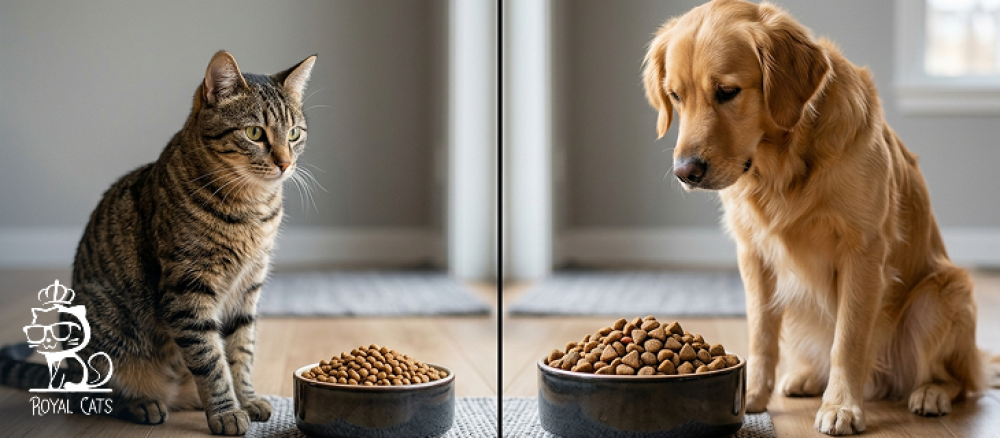

Many breeders, especially those who own both cats and dogs, believe that dry food is just crunchy granules that differ only in size, which leads them to offer the same dish to everyone. This lack of awareness of different nutritional needs may cause hidden health disasters; the scientific fact confirms that the difference between dry food for cats and dogs is fundamental and affects the vital functions of the organs.
Recognizing this difference protects your pet from the risks of taurine deficiency and organ failure, and ensures a long and active life.
Why shouldn't cats and dogs share the same plate?
Many people believe that all crunchy snacks are the same, but the truth is that a lack of awareness of different nutritional needs can cause complex health problems:
- Cats are carnivores: Cats need a very high percentage of animal protein that dog food does not provide.
- Taurine: Most dog food lacks taurine, a vital element for preventing cats from developing blindness or heart disease.
- Fat composition: Cat food contains concentrated fatty acids that their bodies need to produce energy, unlike dog food.
The difference between dry cat and dog food
Cat dry food differs from dog dry food in its nutritional composition and the needs of each animal, as each type is designed to suit its body type and dietary requirements.
- Protein requirements: Cats need a higher protein intake because they are carnivores, while dogs can eat a balanced diet of protein and carbohydrates.
- Taurine: Dry cat food contains taurine, which is essential for heart and eye health, while dogs produce it naturally.<sup>56</sup>
- Fat content: Cat food is often higher in fat to support energy, compared to dog food.
- Vitamins and minerals: The proportions vary according to the needs of each type, especially vitamins A and B.
- Size and shape: Cat food kibble is smaller to fit its jaw, while dog food comes in different sizes depending on the breed.
- Digestion: Dry dog food formulas are easier to digest, while cats require more specialized ingredients.
- Taste and smell: Cat food has a stronger flavor to attract them compared to dog food.
The best types of dry food available at Royal Cats store
Royal Cats offers a distinctive range of the best types of dry food that suit the various needs of cats in terms of daily nutrition and health support.
- Dry cat food : Provides complete nutrition that supports cats' activity and health.
- Dry cat food : A balanced formula that promotes digestion and strengthens immunity.
- Dry food for kittens : Suitable for healthy growth and easy on the stomach
- Dry cat food : An ideal choice for daily use with complete nutritional elements.
- Hills Dry Food : High-quality brands based on veterinary principles
- Hills Dry Cat Food : Supports heart and digestive health
- Dry Food Hills: Featuring carefully selected ingredients and high quality
- Dry Food Hills Kidney : Designed to support kidney function and maintain the health of cats
Growth needs and the difference between baby food
The early stages of life require meticulous care, as the development of puppies differs significantly from that of kittens in terms of the minerals they require. Understanding the difference between dry cat and dog food at this stage ensures the development of a healthy skeletal structure and a strong immune system for both.
- The best dry food for kittens: It is characterized by very high calories and antioxidants that suit their fast burning rate.
- Puppy needs: The best types of dry dog food depend on a balance of calcium and phosphorus, minerals that can cause kidney stones in cats if ingested.
- Pellet size: Cat food pellets are designed to suit their small jaw and chewing ability, compared to larger dog pellets.
Behavioral and environmental risks in shared housing
Living with different animals requires careful planning to prevent conflicts that might start over food and lead to behavioral problems. It's important to provide separate products for each cat.
- Separating food areas: Allocating a high place for cats prevents dogs from accessing their food and vice versa.
- Stress management: Using catnip for cats helps to calm them down and reduce stress caused by the presence of other animals.
- Protecting birds: If you have birds, make sure to place your cockatiel's favorite food in a cage high up, away from the curiosity of dogs and cats.
Symptoms of poor nutrition and how to intervene health-wise?
Ignoring the difference between dry cat and dog food and feeding them both together leads to a general weakening of the immune system. Negative consequences often manifest as severe digestive problems or oral and skin issues requiring prompt medical intervention.
- Digestive problems: Incorrect nutrition may cause irritation that requires immediate treatment of cat diarrhea to prevent dehydration.
- Oral and skin health: The need to treat oral thrush in cats arises when there is a vitamin deficiency, and this can be supported through salmon oil.
- Regular hygiene: Committing to getting rid of cat fleas ensures that parasites that impair proper food absorption are not transmitted.
At Royal Cats, we eliminate all your confusion and provide a comprehensive nutritional guide for every pet based on their actual biological needs. Choosing our products means ensuring your pet has the perfect balance of quality, health, and the taste they love.
Frequently asked questions about the difference between dry cat and dog food
What is the difference between dry dog and cat food?
Cat food contains a higher percentage of protein, fat, and taurine, which is essential for cats' heart and eyesight, while dog food focuses on carbohydrates and fiber.
Can cats and dogs eat the same type of dry food?
No; their nutritional needs are completely different, and relying on one type causes severe nutritional deficiencies in both of them.
Is it permissible to feed cats only dry food?
It is permissible, provided that it is of high quality and balanced, with the necessity of providing plenty of water to avoid kidney problems.
Can dogs eat dry cat food?
Not recommended; because cat food is very high in fat and protein, which may cause dogs to become obese or have kidney and pancreas problems.