
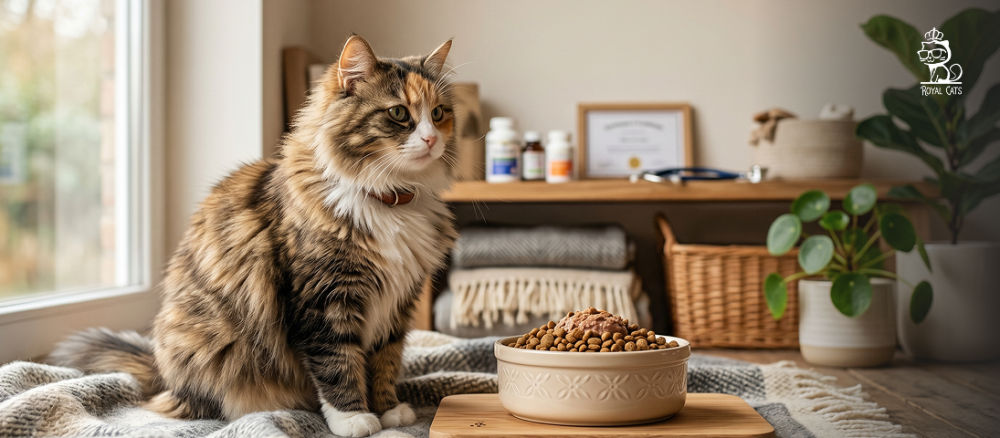

If a pet refuses to eat its usual food, it is a worrying sign that requires your immediate attention as a responsible pet owner.
Understanding the causes of loss of appetite in cats helps you determine whether the problem is due to a passing illness or a temporary psychological condition, giving you the ability to intervene quickly and choose the appropriate treatment to keep your pet healthy and active.
Causes of loss of appetite in cats and how to deal with it
There are many factors that can cause a pet to suddenly lose its appetite; you can identify the causes of loss of appetite in cats and deal with them intelligently by observing the following indicators.
- It causes gum and teeth diseases and deals with them by offering moist foods that are easy to swallow.
- Dislike the location of the container and deal with it by moving it to a quiet and clean place.
- The effects of recent vaccinations and medications are being dealt with patiently, and time is being given to rest.
- Serving very cold food and dealing with it by warming the meals to enhance their appealing aroma.
- Feeling bored with routine and dealing with it by diversifying flavors and food ingredients.
What are the causes of sudden loss of appetite in pets?
A sudden change in a cat's eating behavior requires close veterinary monitoring to ensure its well-being; the answer to the question of what causes sudden loss of appetite lies in the following points.
- Exposure to acute intestinal obstruction as a result of swallowing foreign objects or large hairballs.
- Respiratory infections weaken the sense of smell and cause a loss of appetite.
- Experiencing sudden pain in internal body organs such as the kidneys or pancreas.
- Experiencing extreme stress due to moving to a new residence or the arrival of another animal.
- The presence of intestinal parasites or active worms that absorb nutrients and cause persistent nausea.
Discover now the best types of nutritional supplements for cats
How many days can a cat survive without food without danger?
Fasting for extended periods is a critical matter that directly threatens a cat's biological well-being; to answer the question of how many days a cat can survive without food, the following timeframes should be considered.
- One day without food, the pet's body begins to feel lethargic and generally weak.
- Two to three days represent the maximum and very dangerous period before liver function deteriorates.
- Complete abstinence quickly leads to fatal fatty liver disease in cats.
- Rapid weight loss with fasting accelerates the failure of the animal's vital organs.
- The absence of water and food will end the cat's life within a few days due to dehydration.
The best products available at Royal Cats
Royal Cats offers a selection of the best products suitable for cats suffering from digestive problems, combining easy digestion, intestinal support, and fluid replacement to keep your cat healthy:
- Dry food for kittens
- wet cat food
- Cat food with chicken
- Probiotics for cats
- Cat food supplement
- Lactose-free milk for cats
How can loss of appetite in cats be treated medically?
Medical intervention requires a thorough examination by a veterinarian to determine the underlying cause and prescribe an appropriate treatment plan; the treatment of loss of appetite in cats at the clinic depends on the following methods.
- Comprehensive blood tests and X-ray examinations are performed to accurately diagnose organic diseases.
- Administering intravenous nutrient solutions to compensate for severe dehydration resulting from continuous fasting.
- Prescribing veterinary drugs designed to stimulate hunger centers in the brain and increase the desire for food.
- Prescribing antibiotics and anti-inflammatories to treat gum and respiratory problems that cause aversion.
- Temporary medical feeding tubes are used in critical cases to ensure that nutrients reach the liver.
Treating loss of appetite in cats at home using natural methods
You can follow some simple and safe steps to encourage your pet to eat its meals and regain its usual activity level; treating loss of appetite in cats at home involves the following natural methods.
- Add a little boiled chicken broth without salt or spices on top of the dry food.
- Warm the wet food for a few seconds until its strong aroma is released and attracts her sense of smell.
- Feeding the pet manually while stroking its head gives it a sense of security and comfort.
- Gently clean the cat's nose with a warm cloth to remove secretions and help it smell food.
- Mash tuna or salmon and mix it into daily meals to increase the appeal of the taste and aroma.
Discover the most forbidden foods for cats
What are the signs that cats are about to die from illness?
A pet's body undergoes obvious biological changes when its health reaches a critical stage due to illness; the answer lies in the following vital signs.
- A severe and noticeable decrease in body temperature, especially in the extremities of the legs and ears.
- A weak pulse and a very slow heart rate with difficulty and sluggishness in breathing.
- Complete and final abstinence from drinking water and eating any kind of food.
- The search for dark and very secluded places to hide in and the desire for isolation.
- Loss of control over bodily functions and the emission of foul odors from the body due to organ failure.
Discover now the most important symptoms of hairballs in cats
Royal Cats offers complete and innovative food solutions specifically designed to attract a weak sense of smell and stimulate your pet's desire to eat voraciously.
The store allows you to shop for a luxury selection of wet foods rich in natural meat and chicken broth, along with liquid appetite-stimulating supplements and vitamins that are mixed with meals to compensate for nutritional deficiencies and support liver health.
Frequently asked questions about loss of appetite in cats
Does a cat's liver get affected by refusing food?
Yes, prolonged fasting leads to fat accumulation on the liver, which causes liver failure that threatens the animal's life.
Does changing the type of food cause cats to refuse food?
Yes, cats tend to be routine-oriented and may refuse to eat new meals if they are introduced suddenly without gradual introduction.
When should you visit the veterinarian immediately?
A visit is necessary immediately if the complete abstinence from food and water continues for more than twenty-four hours.